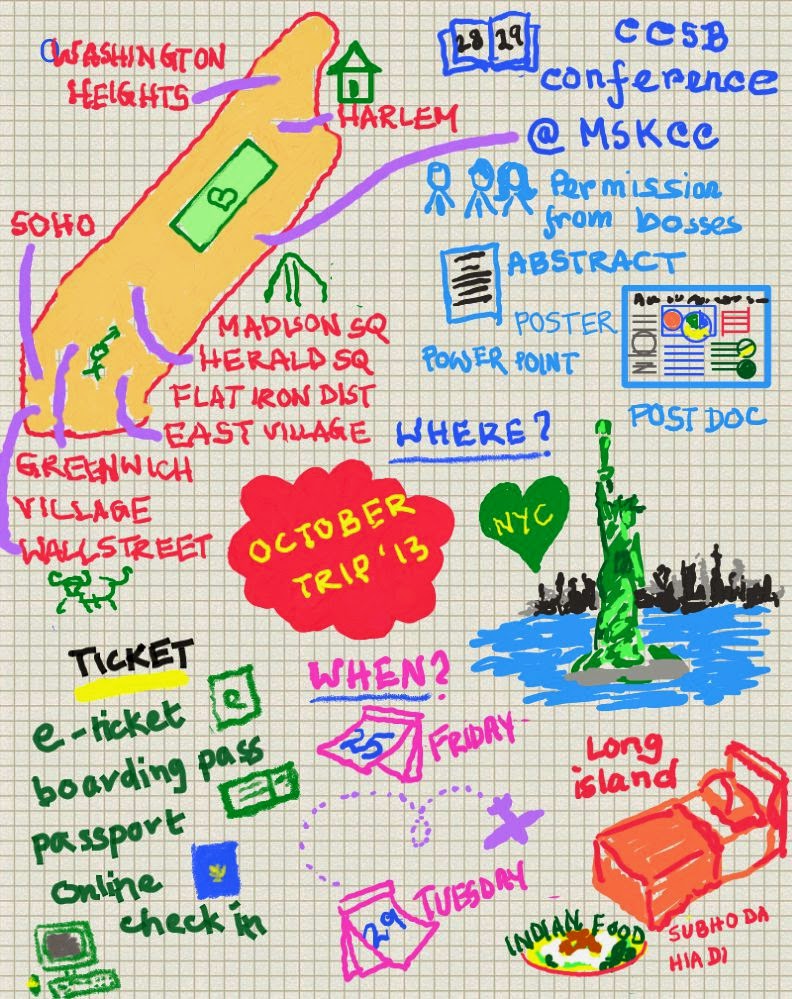
NYC dream: where tourists don’t go!

I
      I always wondered where New Yorkers spend their weekends (and weeknights). Do they go see “Statue of Liberty” or “Rockefeller Center” every other weekend? Do they walk by “Times Square” every evening? Do they climb on top of the “Empire state building” on a monthly basis? The answer as I get from the popular blogs written by New Yorkers is – NO! New Yorkers do not visit these touristy attractions. Some of them even claim “tourist dodging” to be their favorite sport while walking on the 5th Avenue. They take pride in walking the streets with Alec Baldwin and Tina Fey and do not look at them because of the lack of time! So, what do New Yorkers really do during the weekends?    
      
      I gathered the list of places that you can only experience if you are in NYC for more than a week. These places are not the usual tourist attractions. The New Yorkers take pride in walking by these places every day and feel excited about the historical and popular cultural connections to each of them. As NYC is accepted and celebrated as the city of neighborhoods, the list goes by neighborhoods.


1. Union square – George Washington, Abraham Lincoln statue, figure of charity, Metronome, Passage time, Green market, Republic (Asian food)


2. Financial district – Smithsonian museum of American Indian, Bull, Trinity church, St. Paul’s chapel, city hall


3. East village – Cube (push to spin), Cooper square, The village voice magazine, Trash clothing store, Tomkin square park, hare krishna tree


4. Morningside heights – Cathedral St. john divine, St. Michael’s good vs evil statue, Tom’s restaurant, riverside church (tallest church in USA, gothic architecture), Morningside park


5. West and Central Harlem – Marcus Garvey park, Apollo theater, Harlem market (African stuffs)


6. Central park – Imagine circle, Belvoir castle, Delacorte theater, Summer stage (June-Aug), Turtle pond, Cleopatra’s needle obelisk, Alice in wonderland statue, Bethesda terrace, central park zoo, the pond (south east corner)


7. Greenwich village – Washington square park, Café wha, Mamoun’s restaurant, Friends’ building, Cage basketball court


8. Chinatown – Chatham square, MOCA (museum of Chinese american), Mahayana Buddhist temple, Canal st bargaining shopping, Restaurants (Joe’s shanhai, NY noodle town, dimsum gogo, golden unicorn)


9. SOHO – cast iron buildings (king and queen of green st), art galleries (Franklin bowles, Louis K. Meisel ), NYC fire museum, Children museum of art, shopping along broadway, night club (Balthazar, SOB, SOHO park, Bar 89- bathroom door, Marshal’s kitchen, Raoul)


10. East Harlem – Museo del barrio, Edward Kennedy statue, Restaurant – Rao’s (southern Italian), Amor cubano, Creole, Camaradas el barrio, Patsy’s pizzeria


11. Hamilton heights – Dance theater of Harlem, Harlem school of the art (dance class), Sugar hill, Riverbank state park


12. Columbus circle – Christopher Columbus statue, Museum of art and design, Lincoln center for performing arts, Time warner’s center – shopping, restaurants


13. Times square – ABC studio, Restaurant – Hard rock café, MTV studio, Broadway theater


14. Madison square and Herald square – Flat iron triangular building, Madison square park, restaurants – shake shack, New York Herald owner statue, Greeley square park, New York tribune owner’s statue, Macy’s


15. Lower east side – Tenement museum, restaurants – Katz (Jewish), Synagogue, night club (Mercury lounge, Grocery, Sapphire lounge), view of Brooklyn at east river


16. DUMBO – River café for view, Brooklyn bridge, Brooklyn bridge park, Restaurants ( St. Ann’s warehouse, Rebar, superfine, grimaldi’s pizza, river café), Galapagos art space, 111 front st art galleries


17. Meatpacking district – art galleries, ground zero museum, restaurants (Bill’s, Brass monkey, Pastis, Spice market, Macelleria, Nero D’avola), Chelsea market,  Free outdoor film at Pier 54


18. Chelsea – General theological seminary of Episcopal church, Limelight market place, art galleries between 20th and 28th St., Hudson river park, farmer’s market, High line, St. Vincent De Paul church, Gotham comedy club, Upright citizens brigade, restaurants (Don Giovani, Del Posto, Moonstruck diner, Budakan, Le graine’s café, Billy’s bakery), frying pan bar


19. Flat iron district – Center for Jewish history, Masonic history museum, museum of sex, restaurants (Eataly café, Hill country, Craft bar, Blue smoke, Boqueria), Clubs (Flat iron lounge, Slate, 235th rooftop bar), Gramercy theater


NYC dream: A bit of NYC elsewhere

I have read somewhere that if you keep your eyes open for something you will find it in the most unusual places. For past one year, I have been obsessed with NYC and hence, I found a bar whose location and interior décor reminded me of NYC.

I have been living close to Windmill lounge for past four years. Interestingly, I have never noticed the interior décor of this place before a friend of mine, Josh, started going there very frequently. The open patio is right next to the green line train. When I’m out there, sipping through a Juan Collins, listening to the music from Jukebox, chatting with my friends, looking at the train passing by this place, suddenly it feels like I’m not in Dallas. I’m at a bar in Queens close to the subway.


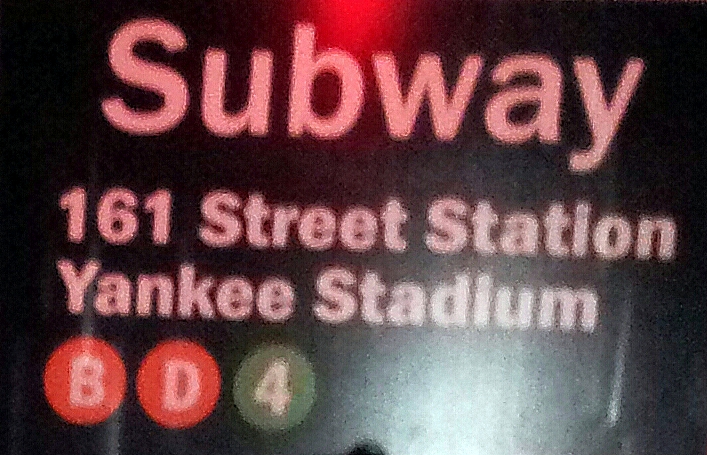
Inside the bar you will find a lot of vintage decorative stuffs, poster of Woody Allen’s Manhattan, art galleries from SOHO and even the Yankee stadium subway station at Bronx. I got curious and asked the bartender, Charlie, who did the decoration and what their motivation was.


“Louis and I did most of the decoration here. The motivation comes from NYC. I have been to many bars in NYC which are dark and have neon lights” Charlie replied.

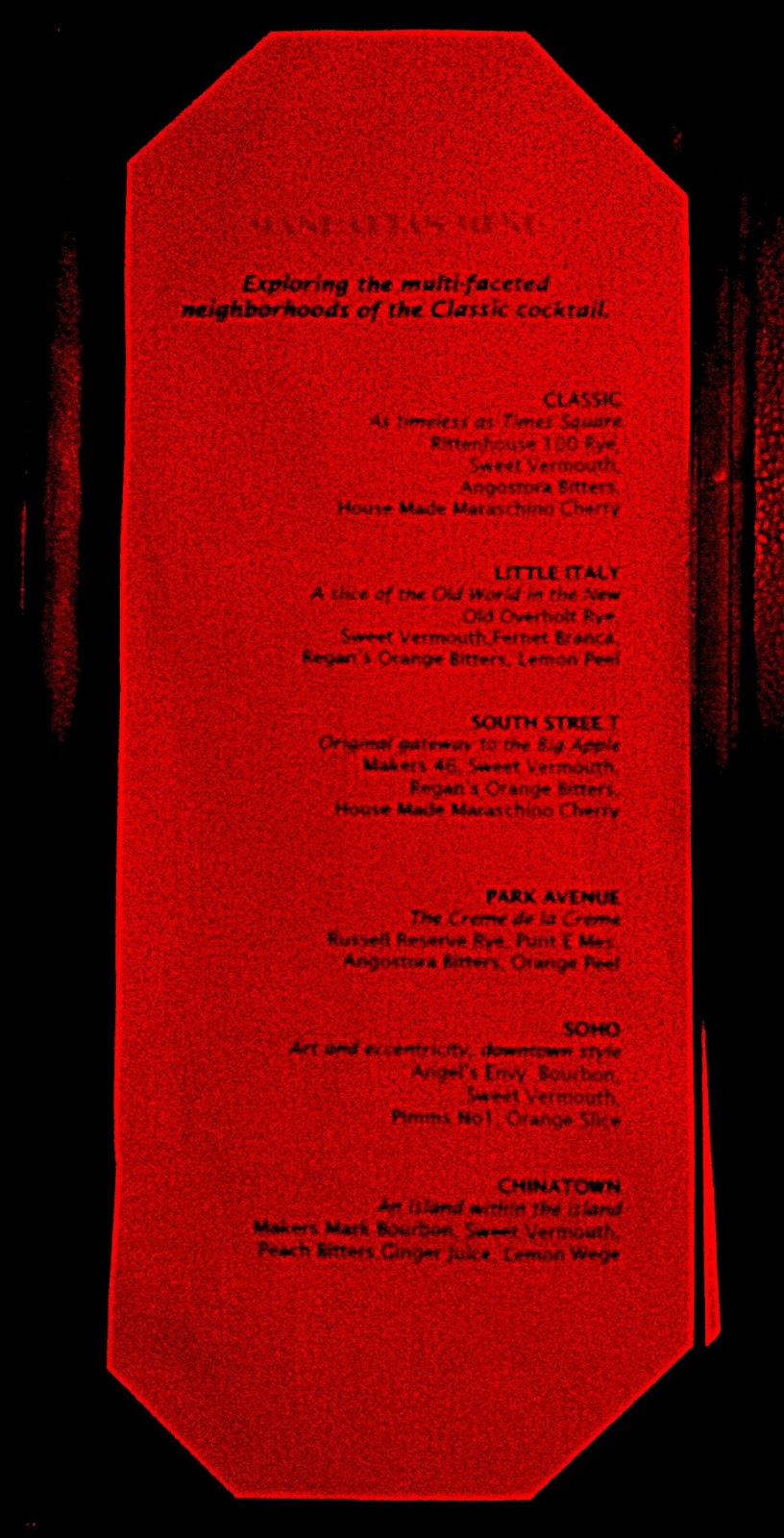
The cocktail menu is named after Manhattan. It says “Exploring the multi-faceted neighborhoods of the Classic cocktail”. There are special drinks from Little Italy, South Street, Park Avenue, SOHO and Chinatown. 

My friend Josh, who grew up in Texas, got back from Manhattan couple of months back. He lived in Theater district for couple of days and immediately fell in love with the teeny-tiny apartments, huge number of artists, writers and performers, liberal culture which form the soul of NYC. He wanted to have this drink called “007” at Windmill which he had in a bar at Manhattan. To our surprise, one of the bartenders guessed correctly what is it composed of. The other said jokingly “Oh, we just know and serve good ones!”.

After I got back to bed last night, a little tipsy from the cocktails, I had a dream where four of my lab mates are looking at a gigantic statue of the Kingkong climbing the Empire state building. Talk about obsession!

NYC dream: Merging biomedical science and fine art!

In my mind, each city I have been to has a unique place that pulls me towards it. The attraction is so strong that once within certain distance I literally start running to reach this point, as if some invisible force keeps pulling me from the center of my being. These places exist for a purpose; A purpose that connects to my idea of “being human”. Each of them either creates or strengthens a new layer of self realization – from “who I am” to “who I will be” shredding the cocoon of “who I was”. I remember three of these places very clearly.

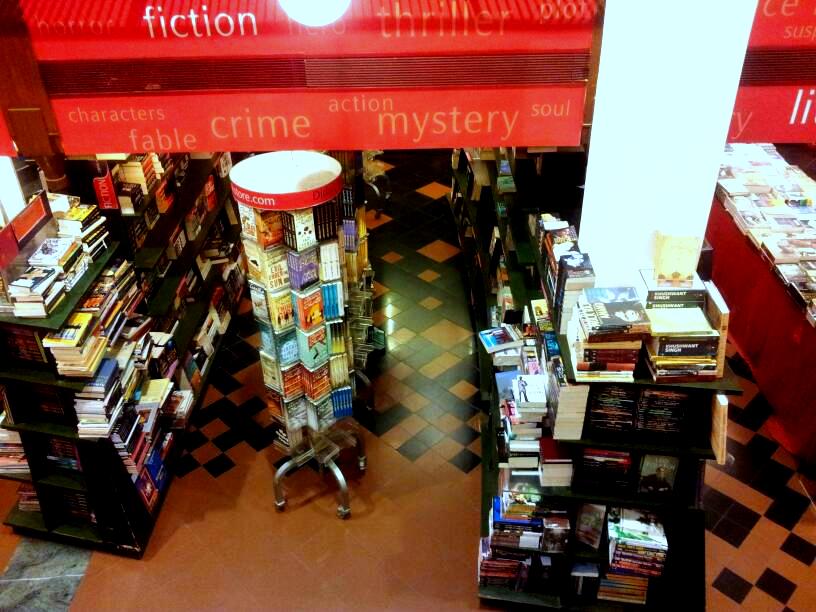
First, is the Oxfordbook store located at Park Streetin Calcutta. Now, I must mention that it was a bit ironical. I walked through the largest second-hand book market in the world (College street, Calcutta) for 10 years of my life. And still the realization hit me not in College street, but in Park street. It was the year 2000, as I remember; I went to buy Robin Cook’s Chromosome 6. That’s when I knew I wanted to be in biomedical research and have a strong responsibility from the ethical standpoint.

Second, is the Animaster academy on Sankey Road in Bangalore. Although there were few fine art academy, art galleries in other areas of Bangalore, yet again it was this animation and cartooning school that stood aside. In 2005, that’s where the realization struck me that my connection with fine art is a lot deep rooted than I had imagined so far. It is not a mere hobby, but a spiritual experience – something that enables me to communicate with the world and beyond.

Third, is the place that brings the first two together, the place that makes science and art entwined, if not joined, in my life – the angel of Bethesda at Central Park in New York City. It was a freezing day in February 2012, when I ran down the staircases, ran across the terrace and then stood in front of the grayish blue statue of the angel.

The very first reference, where I saw this statue, was the TV series called “Angels in America”. It spoke about the story of the original fountain of Bethesda in Jerusalem with a reference to Gospel of john. The angel of Bethesdadescended from the sky in the middle of the market square. As her foot brushed the ground, a fountain sprang up from that spot. Whoever bathed in that fountain would be healed. When the Romans destroyed Jerusalem, the fountain went dry. Legend has it though, at some point it will flow again.
I read later that in NYC, the fountain commemorates the Croton Aqueduct water system, which first brought fresh water to the city in 1842. The angel carries a lily in her left hand – a symbol of the water’s purity, very significant to the city that had previously suffered from a devastating cholera epidemic before the system was established. The stone angel at the center, created by Emma Stebbins, marked the first time a woman received a public art commission in NYC. Also, this was the only sculpture to have been commissioned to be part of Central Park’s original design. The angel at the center spreads its wings and stands above four small cherubim representing health, purity, temperance, and peace.
In addition to the mythological connection to healing and historic connection to purity of water, the statue, I realized, has something more to offer – a missing link hidden in the human history connecting fine art and biomedical science. NYC is well known as the cultural center of the world with countless number of art galleries, museums, young artists and performers. It is also known to be the second largest research grant receiving city (after Boston off course) housing nine biomedical research institutes with graduate and post doctoral training programs. Hence, I see NYC as the perfect place for merging science and art to many levels of life.

NYC dream: How much space part II

Last time I wrote on “how much space one needs to live a city life”, I didn’t know that I would be back with the part II so soon. I think it has something to do with my interest in always exploring what is out there.
As I started flipping through various articles on NYC, I noticed some very eccentric apartment floor plans. At the same time it occurred to me that a square shaped floor plan, however small it is (175 square feet), may be a lot easier to plan. But, how about an oddly shaped apartment with a full sized kitchenette and yet an oddly shaped bed nook which can hardly fit a queen size bed? Or, even a smaller apartment – about 136 square feet?
Yes, they really exist. The first one is apparently an apartment in Upper East Side. The main entry faces a kitchenette with a full sized refrigerator, oven and microwave. Immediately, to the left is the bathroom and to the right is a built-in closet. A small wall hardly separates the kitchenette from the only other area (leaving or sleeping) of the apartment. The moment I saw this floor plan I felt a challenge to work on this one. I asked the same question again – what are my bare necessities and collectibles I must live with? A queen bed is the first one to make the list. I would never settle for a futon/day bed as they don’t match my comfort level while sleeping.
The best place to put the bed is obviously beside the separating wall so that it decreases the feeling of “sleeping in the kitchen”. Then the problem was where to make a leaving area? As I don’t like a sitting arrangement facing the bed, I used the opposite side of the sleeping area to fit the dresser. That leaves the only area opposite to the kitchenette to be the living area. The good is that when anyone enters through the main door it will lead to a sitting area and if decorated with proper color, light and furniture it would not make you look at the kitchen immediately. The bad is that the living area is not big enough to fit a couch/loveseat.  
I could fit two single sitters in that area facing each other and that leaves an urge to have a coffee/center table. But given how small that area is for being right in front of the main entry, I could only use an ottoman. It would store stuffs inside, could be used for extra sitting and with a wood/glass board on top would serve as a tiny center table. Another plus is that the single sitter continuing the boundary of the sleeping area decreases the wish for guests to go around and sit on the bed.
The second apartment, not sure located in which neighborhood, has 2 big and 1 small windows and yet another challenge. It happens to be the smallest apartment I have read on. It has an interesting 2 feet wide hallway entry. The left side of the hallway is the bathroom while the right side is an 8 feet long but very skinny closet. That makes the 40 square feet. The hallway leads to the rectangular 12×8 square feet area. To the left is the minimal kitchenette. It has a skinny sink, small refrigerator under the wooden rack, but no oven. This could, however, be solved by using a small sized electric oven. In addition a high CB2 table can serve as an island/dining/office table. Now what to do with rest of the 96 square feet?
The first priority is, as usual, to fit a queen bed. As the bed goes to the farthest wall, by the window, it keeps minimal space for a lean bench which can be used to hold the bedside lamps and books with possible storage underneath. This leaves the space opposite to the kitchenette for living area. It serves perfectly well with one of the big windows. A loveseat fits well, but it faces the bed and in this situation it can not be resolved. A mesh curtain can however separate the sleeping area. Like the previous entry an ottoman can serve multiple purposes and still not take much space in front of the loveseat. Alternatively, a Lucite table will utilize the natural light and give an illusion of larger space.

Oh, by the way, my cousin from Long Island, who was mentioned in the last blog, read the last blog and sent me his comment through personal communication: “I also like small places to live. But not in NYC. No coffins. But I will happily live in a small tent in the middle of a wilderness”. It seems my third sequel of “how much space” would be on airstreams and tack houses!

NYC dream: How much space does it take to live a simple, clutter-free city life?

Irrespective of one’s life style, I have noticed that home is always a place where everyone wants to feel safe, relaxed, happy and satisfied. Even those who travel a lot for work, like that guy George Clooney played in the movie “Up on the air”, still feel the same after a long trip. I have also noticed that there are two kinds of people: one, like my father, who likes to live in very big and scattered place, and the other, like my mother, who liked to live in compact and clutter-free space. I belong to the second category.
Why so?
1)   I am a city person. So, the only time I am home when I’m sleeping, cooking, or painting. This means I get a very short amount of time to clean up the place. A small place takes less time to clean.
2)   Having a small place in a big city is economical. The maintenance or rent is always easier to pay when the amount is small.
3)   I spent first 14 years of my life growing up in a 300 square feet apartment. I have seen the amazing creative things my mother has done with that teeny tiny space. She always thought vertical about furniture. She also taught me the simplest trick to be organized – always keep the stuff in the same place where you have taken it from. Later, when we moved to this 1000 square feet apartment, we made it look pretty. But somehow, I felt that the charm of multipurpose furniture, living with simple possessions, was lost.
4)   I like the challenge of being clutter-free, simple and super-creative. Creativity is something that, according to me, no one can learn. You can train yourself to some extent. But, you will have to be born with a creative brain to be exceptional. If God makes every human being special with one unique thing, in my case, that thing is creativity.
5)   I never feel suffocated in small places. Now there are people who are claustrophobic and they absolutely can’t live in small places. For example, my cousin thinks of Manhattanstudio apartments as “Coffins”. On the contrary, I always liked living in studio apartments. I stayed in this 200 square feet micro-studio apartment in Bangalore, Indiafor 6 years. Although my father would argue that it did not feel suffocating as it had a huge open terrace in the front from where I could see the stars on the sky, the rotating light of TV tower and construction work going on in a high rise building nearby.
6)   I have been living in a 675 square feet, one bedroom apartment in Dallasfor past 3 years. I always feel like I’m not utilizing all the space I have. Each wall, each corner, each square foot should have a purpose and unique charm. To bring that charm out I will have to decorate this apartment with lots of things that I won’t use and they will eventually increase the list of clutters in my life.
The idea of living in teeny tiny apartments became more real because of two reasons: 1) when I declared my plan of moving to New York Cityafter I finish my PhD, and 2) when my sister-in-law introduced me to this wonderful website called apartment therapy.
To examine my ability to live in a teeny-tiny place I gave myself a test.
I found out the smallest microstudio in Manhattan. This studio, located at Morningside Heights, has only 175 square feet of space including a fully functional kitchenette (oven, sink, microwave, exhaust fan, a small surface for cutting stuffs and refrigerator) and a tiny bathroom (shower, toilet and basin). I found the floorplan online.  

175 sq ft microstudio at MorningsideHeights in Manhattan (above), my floor plan for the same (below)

Next, I made a list of necessary things I need to live in NYC-
  1. A queen bed (The bed linens, extra pillow, blanket will be stored underneath along with the international travel bags)
  2. A futon for living space that can also serve as weekend guest bed
  3. A closet to hang the down coats (winter), raincoats, scarf, hat and to store the snow and rain boots.
  4. A dresser to keep the clothes (The top would serve as a TV/monitor stand)
  5. A coffee table (with storage underneath)
  6. A divider rack to separate the bedroom space from living room space (It will also serve as display for decorative stuffs and storage for many things. The doors to the cabinets would be 12”x12” canvas of my oil paintings)
The next thing was to find the dimensions of each of these and see if they fit in the floorplan. To my surprise, all of the above fit well. Moreover, there was some space left for bedside tables.
In summary, it looks like, 175 square feet is big enough if you are creative and organized.