Abstract
Biomedical art-science collaboration networks are flooded with inter, cross, multi and trans – disciplinary collaborative works among artists and scientists from various areas. But, the number of paradisciplinary “sci-artists” who practice both science and art professionally in parallel, is rare. In this research paper, I report three polymaths: Leonardo Da Vinci, Alfred L. Copley, and Francois Joseph Lapointe, from three periods of human history who have been paradisciplinary “sci-artists” and have made excellent contribution to both biomedical science and art. Through these examples and my personal experience of becoming a cancer sci-artist, this paper discusses the challenges in becoming “sci-artists” and possible ways to overcome them to inspire single individuals interested in dual careers.
Introduction
Biomedical science and fine or performance art collaborative projects have become a popular area of art-science collaboration research in recent years (1,2). But, there are several problems in collaboration among multiple biologists and artists in the field of biology based art, as Francois Lapointe discusses in his SEAD white paper (3). First, the biologist may be used as a technician in the process of collaboration without any formal recognition of scientific contribution to the creative process. In this case, the biomedical science only provides a context for the artists to create their art works. Second, the artist may assume that he/she is doing science while only participating in the process of science. Lack of expertise and knowledge in literature review, hypothesis formulation, series of experiments to test such hypothesis for the artist would delay any advancement of science via this art-science project whatsoever (3). One solution to such problems is – paradisciplinarity, where a single individual rigorously learn and practice both biomedical science and art at the same time.
In paradisciplinarity, the individual should perform both the disciplines in parallel in a synchronous manner. For example: a neurobiologist who studies patterns of information flow through the neurons in a diseased condition and paints neurons will fit this criterion; but, a neurobiologist who changed career to become an actor does not (E.g. Mayim Bialik, who plays “Amy Farah Fowler” on “Big Bang Theory” had a Ph.D. in Neuroscience. But she gave up research to become an actor (4)). Additionally, the importance and involvement of each disciplinary practice should be relatively symmetrical in the curriculum of an individual. For example: a composer who publishes scientific papers in acoustics and also performs in a concert hall professionally and regularly will meet this criterion. A physicist who publishes studies on string theory in scientific journals and paints as a hobby at home does not. Strictly speaking, a “sci-artist” is a scientist and an artist at the same time with experience in scientific methodologies and artistic practices.
Although such paradisciplinary sci-artists are rare, it is not entirely impossible to find such example in the history of mankind. The very first golden age of improvements in both biology and art began during the renaissance period. Leonardo Da Vinci was called “The Renaissance Man” for a reason. Unlike other artists like Rafael, Michelangelo etc., Da Vinci was a painter, sculptor, architect, musician, mathematician, engineer, inventor, anatomist, geologist, cartographer, botanist and writer. He is a perfect example of a polymath and sci-artist. Later, in 20th century, Alfred L. Copley can be considered as another biomedical sci-artist who practiced medicine, as a biologist studied the flow of blood through vascular system of human, and as a painter created the flow of liquid using abstract expressionism techniques on canvas. Finally, Francois Joseph Lapointe in 21st century, is the third example of a biomedical sci-artist who had two Ph.D.s: one in evolutionary biology in 1992 and the second is in dance in 2012. Currently, he works on human genome research in his lab at University of Montreal, as well as choreographing creative dance forms for various performances around the world. These three exceptional polymaths and biomedical sci-artists are discussed in the next section.
Leonardo Da Vinci: The Renaissance Man
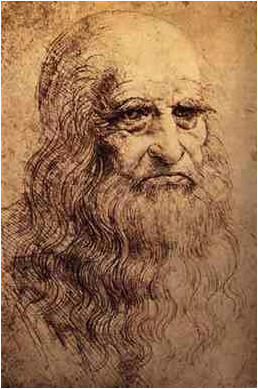
Leonardo Da Vinci epitomizes the boldness of the Renaissance, when the confidence in the capabilities of man led to the idea that they could excel in many activities. Born in 1452, Leonardo was trained in Florence, and he was very much the product of the cultural and artistic environment of that city. He worked for the court of the Medici family there. Later for many years in Milan for the ruler of the city, Ludovico Sforza, he worked as an artist and as a military engineer. At the end of his life he was called to France by king Francis I. He died during 1519 (5, 6).
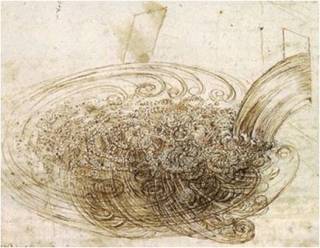 His interest in art and science were linked to each other, like two sides of the same coin. Figure 1 shows a drawing by Leonardo. It shows studies of the way water behaves when interrupted by foreign object and, at the bottom of the image, when falling from some height on to a pool. Here, the intention of the artist is not to draw a snapshot of a beautiful thing, it is to understand the way the current of water behaves. His tool for doing this is drawing. Interestingly, at that time fractals (self repeating units) were not known to the mathematicians. Neither did scientists understand the interaction of order (predictability) and chaos (unpredictability) in a complex system. However, Leonardo’s drawing and his notes clearly shows that he started to understand the behavior of complex systems using flow of water as an example (7).
He studied human body as a complex systems and he drew many parts of it. Figure 2 shows his drawing, Vitruvian Man, where the proportion of human body was studied. Even today, artists practicing figure drawing, character designing and animation follow these simple rules of proportions of human body studied by Leonardo. As is the case today, imaging was in the forefront of scientific research at the time, and Leonardo was a leader in this field. Painting was only one of the many activities in which he excelled. We only know approximately thirteen paintings by Leonardo, depending on whether we accept or not a few attributions in them, and several of these paintings are damage or unfinished. In spite of this he was enormously influential (5).
The largest Art – Science research community founded by Frank Malina in 1982 was named after this legendary Sci-artist – Leonardo, International Society of Art, Science and Technology.
Alfred L. Copley: One man two visions
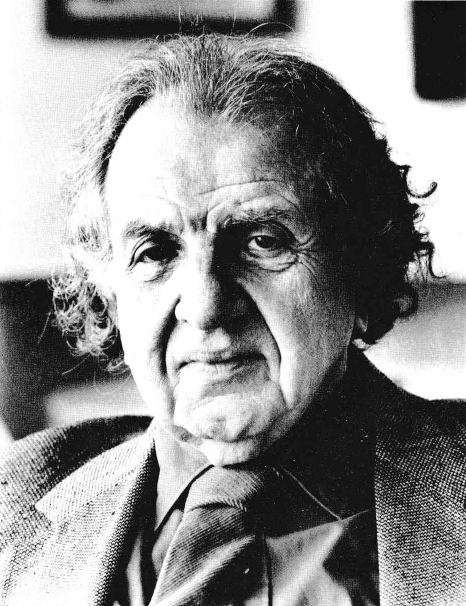
Alfred Lewin Copley was born on June 19, 1910 in Germany. He resided in Dresden until the age of 20. Then he moved from one city to another in Europe staying for short time in each city such as in Berlin, Frankfurt, Heidelberg, and Basel. After he completed his studies at medical school, he moved to New York City to work as a medical practitioner in 1937. At this point, in addition to practicing medicine, he started taking both practice based and theoretical art classes. He became an U.S. citizen in 1943 and mostly resided in New York City till 1952. He spent 2 years in Paris and then finally settled at 50 Central Park West in New York City. He passed away in 1992 (8).
As a scientist, Copley studied “rheology” (Greek Rheo – Flow, and Logia – Study of) i.e. the study of the flow of matter, primarily in a liquid state, but also as ‘soft solids’ or solids under conditions in which they respond with plastic flow rather than deforming elastically in response to an applied force (9). In 1948 he introduced the word “biorheology” to describe rheology in biological systems (10). In 1952 he introduced the word “hemorheology”, to describe the study of the way blood and blood vessels function as part of the living organism (11). In 1966 he established the International Society of Hemorheology, which changed its name and scope in 1969 to the International Society of Biorheology (ISB) (9). In 1972 the ISB awarded him its Poiseuille gold medal (9).
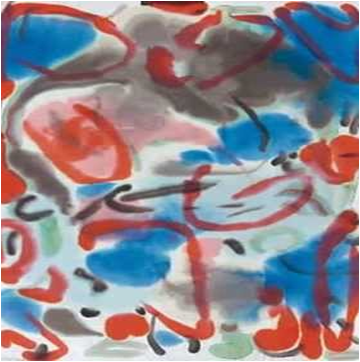
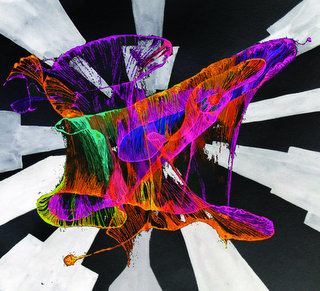
Alfred took up the artist name Alcopley while residing in New York City. He is well known for his abstract expressionist paintings (Figure 4). In 1949 he was one of twenty artists who founded the Eighth Street Club. The group also included Franz Kline, Willem de Kooning and Alcopley’s close friend, the composer Edgard Varèse (12). He participated in the Ninth Street Show in 1952 and had a solo exhibition at the Stedelijk Museum, Amsterdam in 1962 (9) His work is held in the collection of the National Museum of Modern Art, Tokyo (9).
Alfred believed in both art and science as two major paths towards the exploration of nature and the advancement of human knowledge. In 1991 he wrote – “The notion that art and science are contradictory originated with Nietzsche, who considered art as the highest form of human activity. In recent years the assumption has been made that art and science or, in general, the humanities and science, represent two different ‘cultures’ opposing each other. I do not share such a view, as it appears to me that its proponents do not gasp the similarity or identity of the creative side of two of teh most noble activities of our species. This was not as evident at the time of Nietzsche as it is now” (8).
Francois Joseph Lapointe: Dual Ph.D. in science and art
Francois Joseph Lapointe, born in Quebec, Canada is a contemporary polymath. He earned his B.Sc. in Biological Sciences from the University of Montreal in 1988. In 1992, he finished his Ph.D. in Evolutionary Biology from The University of Montreal. His research area includes Phylogenetic Analysis – phylogenomics, Population Genetics – Molecular Ecology, Conservation biology of endangered species, and Biostatistics – mathematical modeling (13). Interestingly, while working as an assistant professor at the university, he enrolled in a Ph.D. in dance program. He choreographed precise movement at each nucleotide in the genome of the dancers so that they could interpret their own DNA. In addition to his thesis submission in 2012, he created a public performance with 30 professional and semi-professional dancers (14).

On a personal communication (15), Francois wrote to me – “To make a long story short about myself, I must admit that is has been a very long and “interesting” journey to become an art scientist (although I doubt it every day). The thing is that when you expect to have a dual career and want to be successful at both, you must work twice as hard, or accept that you’ll have to be less successful than if you were doing only one thing – science OR art – and not two things at once – science AND art. My own opinion on this is that I will never be fully recognized as a bona fide artist. However, what I do as an “artist” cannot be done without my science training, and without having access to a science lab. For me, being an art scientist is not about being a scientist who also can do art, or being an artist who plays with science. It is more like having a split personality. When I do science, I think as a scientist. When I am doing art, I try to think as an artist (this is the difficult part since the scientist is always looking over my shoulder). Foremost, I see my role and that of others like me as that of an intercessor between two worlds, a translator between two languages.
About how to do it? Don’t know the best way. Not sure that you need a formal education in art, or maybe just practicing art on a daily basis. For me, doing a second PhD in art was not about getting the PhD. It was more a challenge to push myself by meeting on a regular basis with my fellow students in art. Otherwise, I would have stayed home, waiting for a miracle to happen. It takes a lot of energy to succeed in art, probably more than succeeding in science. There is less money, more competition, and it is highly subjective. You become fashionable in a flash and disappear the next day. Very unlikely in science, where it’s more about the data than your personality”.
Cancer Research and Fine Art – a personal experience
I have always carried out experiments in scientific research during the day and practiced various art forms during the night. But, in recent years, they have become very strongly connected. Being in cancer research, a field where many scientists are trying to first understand and then cure a very complicated disease, I have observed that the general public, although affected by the disease on a direct or indirect level, do not understand the complexities dealt with in this research field. In addition, for cancer researchers creative thinking becomes a necessity of utmost importance. I tried to address these problems in my own way.
There are certain individuals who are active visionaries and proponents in art-science collaboration fields. They have been of great motivation and help to me. Cynthia Pannucci, the founder and director of Art Science Collaboration Inc, New York, and Dr. Roger Malina, Executive editor of the Leonardo journal, MIT Press, Massachusetts have been of great help in my art-science journey so far. My Ph.D. mentor, Dr. John Minna, the director of Hamon Center of Therapeutic Oncology Research at UT Southwestern Medical Center, Dallas, Texas has been very supportive of my interest and practice in cancer based art. I have also been very fortunate to meet and learn art from excellent artists such as Caroline Shaw Ometz, Denny Doran and Dr. Anne Gordon Perry.
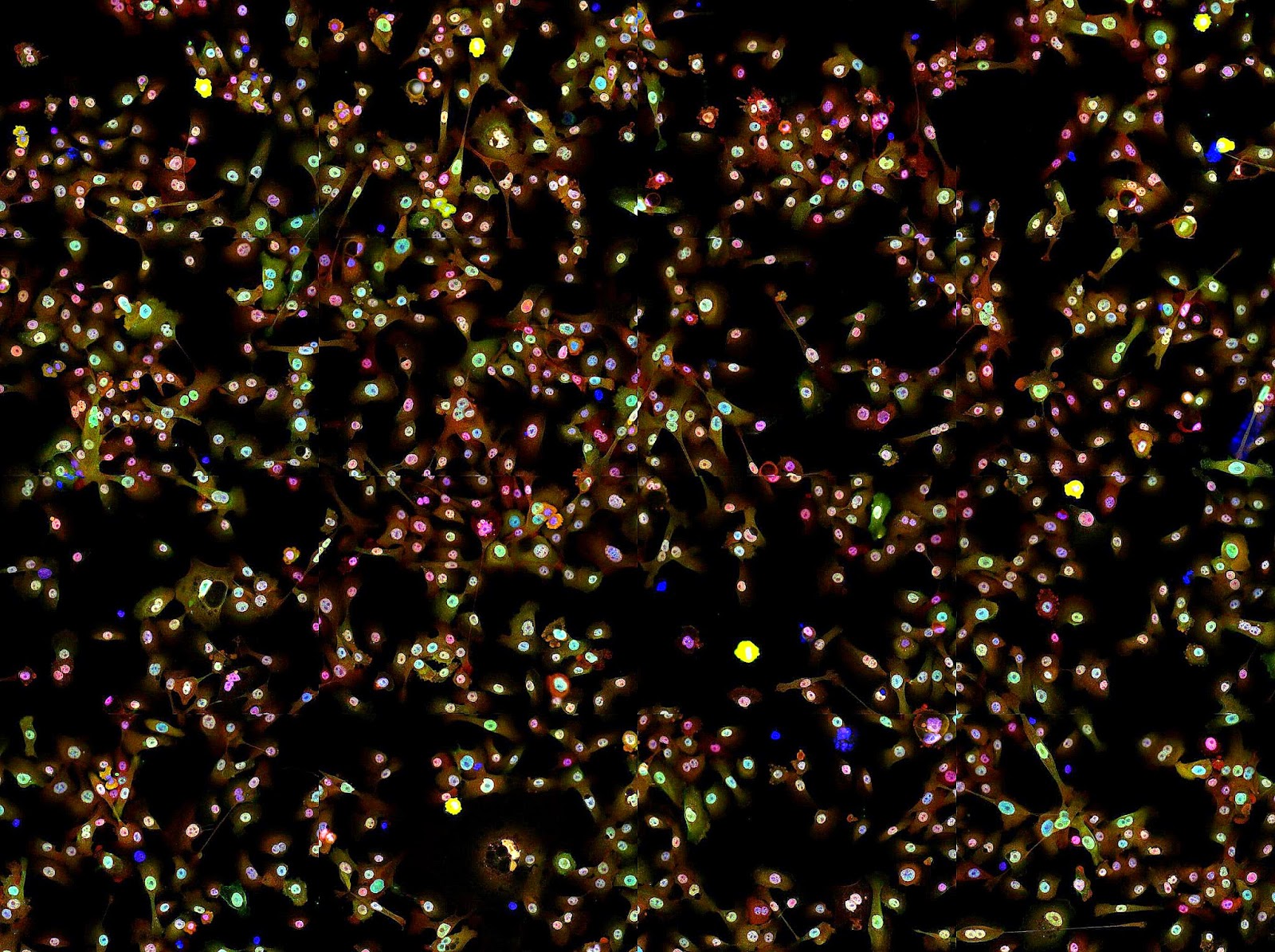
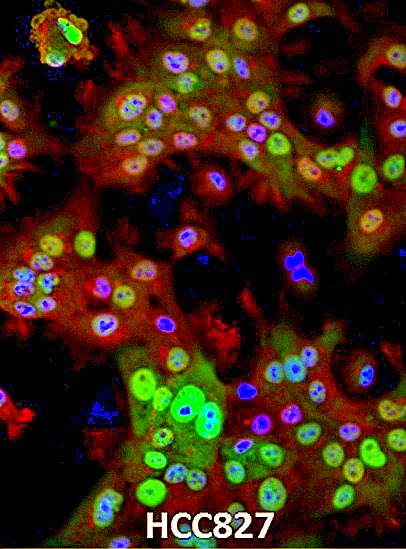
I’m defending my Ph.D. thesis titled “Oncogene-induced signaling heterogeneity in lung cancer” at the University of Texas Southwestern Medical Center, Dallas, Texas in June, 2015. In the same month, I’m starting classes in the BA (Hons) Illustration program from the University of Hertfordshire, UK. I am working on a cancer -art collaboration project called “Cancer: Finding beauty in the beast” with four Dallas based artists. My first cancer-art paper was published in Leonardo journal in May, 2015 (17). I will continue to grow and learn in my journey of becoming a paradisciplinary cancer sci-artist.
Conclusion
It is not easy to become successful in dual careers that are not perceived as well-connected in popular culture. As Francois pointed out clearly, to have two successful careers in parallel, one needs to work twice as hard. There are several general problems associated with such a career path such as difficulties in combining the quantitative and qualitative matrices in both the fields, lack of comparison of different curricula, lack of enough hands on experience of the mediators in both the fields, and difficulties in acquiring funding. In addition, for individuals interested in such art-science career may need to deal with problems associated with the lack of visionaries in art-science field in their specific geographical locations.
The National Academies Keck Futures Initiative at Irvine, California wrote an interesting summary of the problem in contemporary discourse in 2015 (18). To quote them – “The Renaissance has been described as an “integrative period” of unified knowledge – a time during which art and science were one. Homo Universalis, or polymaths, embraced a proficient understanding of art, architecture, science and engineering, leading to a period of wondrous discovery. A shift from integration to specialization occurred over time, which some presume has separated the domains of knowledge and experience and contributed to distinct cultures. Have the cultures really become distinct? There are multiple examples of collaborations ranging from American painter Abbot Thayer’s invention of camouflage to composer George Antheil and actress Hedy Lamarr’s collaboration that led to the invention of “frequency hopping” – the encryption technology on cell phones that helps to prevent messages from being intercepted. Stents used to treat aortic aneurysms were designed using the principles of origami, and Kenneth Snelson’s “tensegrity” sculptures have created a new form of engineering and have helped biologists explain the shapes of cells. Every frontier of human inquiry is art-science in nature in that intuition and imagination are equal partners to deduction and precision. The question is not whether art, design, science, engineering, and medicine are distinct and should be fully integrated, but how do they meet to serve as the bookends for innovation”.
References
1. Pandilovski, M. (2008). Art in the biotech era. Adelaide: Experimental Art Foundation.
2. Reichle, I. (2009). Art in the age of technoscience: Genetic engineering, robotics, and artificial life in contemporary art. New York: Springer.
3. Lapointe, F.J. (2012). How I became an “art [scient] ist”: A tale of paradisciplinarity, SEAD white paper, , accessed on June 11, 2015.
4. Mayim Bialik on Wikipedia , accessed on June 11, 2015.
5. EdX course UC3Mx: CEH.1-ENx Explaining European Paintings, 1400 to 1800, Lecture 11: Leonardo da Vinci (1452-1519). Knowledge and Beauty in the High Renaissance, , accessed June 11, 2015.
6. Fremantle, R. (1992) God and Money: Florence and the Medici in the Renaissance, Leo S. Olschki Editore.
7. Da Vinci, L. (Unknown), translated by Richter J.P. (2014), The Notebooks of Leonardo Da Vinci: Complete & Illustrated, CreateSpace Independent Publishing Platform.
8. Alcopley L. (1993), compiled by Silberberg A. One Man- Two Visions: L. Alcopley- A. L. Copley, Artist and Scientist- A Retrospective, on the Occasion of an Eightieth Birthday, Pergamon Press.
9. Alfred L. Copley in Wikipedia , Accessed on June 11, 2015.
10. E. A. O’Rear et al. (2004) Rheology Bulletin Vol. 73, No. 2 “International Society of Biorheology”.
11. J. F. Stoltz, Megha Singh, Pavel Riha, (1999). Hemorheology in Practice, IOS Press.
12. Steven Johnson (2002) The New York Schools of Music and Visual Arts, Routledge.
13. Francois Joseph Lapointe on University of Montreal , accessed on June 11, 2015.
14. Francois Joseph Lapointe’s website , accessed on June 11, 2015.
15. Gewin, V. (2013). Interdisciplinarity: Artistic merit. Nature, 496: 537-539.
16. Personal communication via email.
17. Leonardo Journal just accepted, MIT Press, , accessed on June 11, 2015.
18. Keck Future Initiative website , accessed on June 11, 2015.
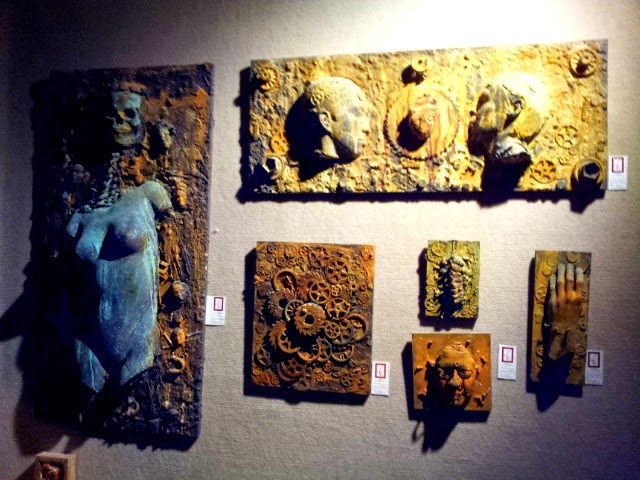
 As a big compensation I curated and participated in a cancer based art show bringing in 6 artists and cancer researchers in one of the top 5 galleries in the Design District of Dallas and installed 35 pieces of artworks worth $1.5 million. My cancer researcher boss kindly served as one of the four panelists along with visionaries and famous scholars from the field of astrophysics, art therapy, business and spirituality. More importantly, my scientist boss’ artist sister flew in from San Diego to watch this show. The evening I moderated this panel discussion, I received the best reward of my life. Both my lung cancer and art mentors exclaimed in union to 140 audience members (and to my embarrassment) “I wish all my students were like Dhru!” That was just the beginning.

















 Science, art and lifestyle
.jpg)